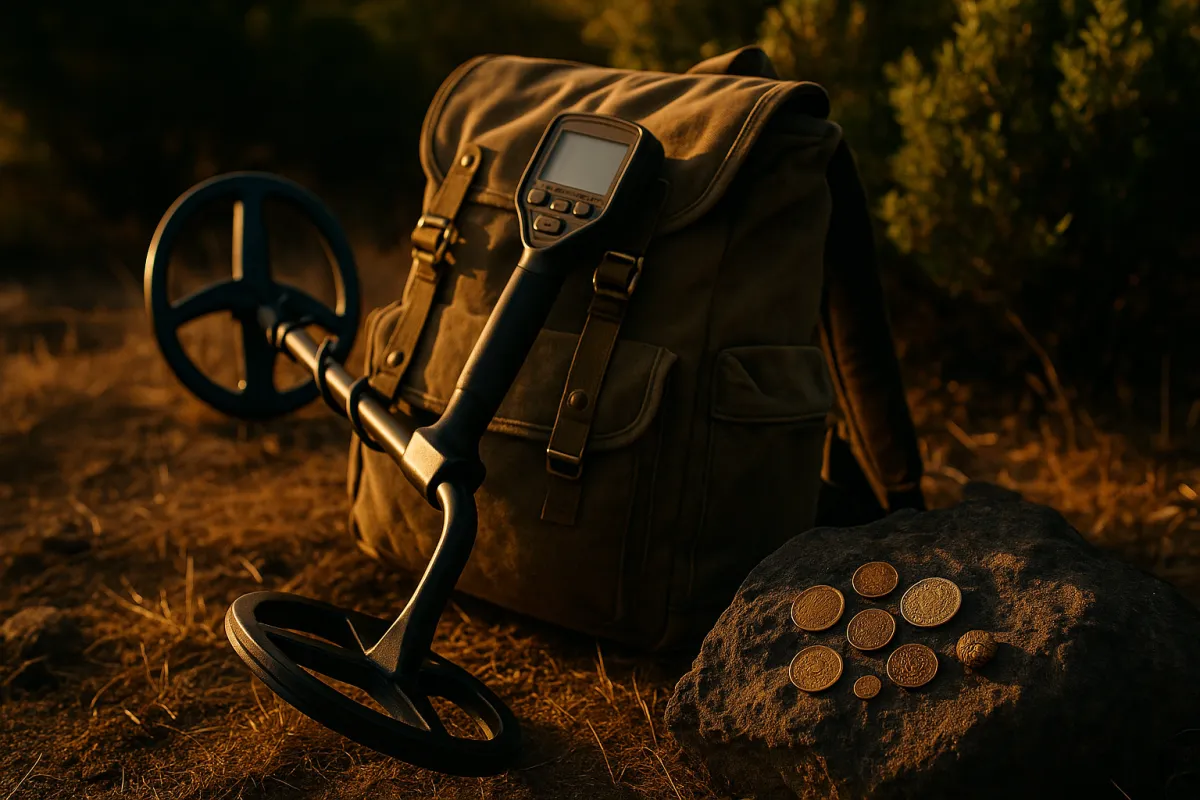
Metal Detecting 101: Essential Gear, Key Settings & Your First Hunt
Metal detecting is one of the fastest-growing outdoor hobbies in America — and for good reason. The thrill of a signal, the mystery of what's underground, and the genuine possibility of finding gold, silver, or lost relics makes every hunt an adventure. If you're just starting out, this guide cuts through the noise.
Choosing the Right Metal Detector
VLF (Very Low Frequency) Detectors
VLF detectors are the most common type. For gold prospecting, you want a high-frequency VLF (18 kHz and above). Higher frequencies are more sensitive to small, low-conductivity targets like fine gold nuggets.
PI (Pulse Induction) Detectors
PI detectors excel in highly mineralized ground — the standard in gold country. They go deeper than VLF and handle black sand and hot rocks better. The trade-off: poor discrimination, so you'll dig more junk.
Multi-Frequency Detectors
The latest multi-frequency detectors transmit multiple frequencies simultaneously, combining VLF sensitivity with improved ground handling. Excellent all-around gold detectors.
Top Picks for Gold Hunting
- Minelab GPX series (PI) — The gold standard for serious nugget shooting
- Minelab Equinox series (Multi-IQ) — Great beginner-to-intermediate option
- Fisher Gold Bug Pro (VLF) — Affordable, high-frequency, solid for beginners
- Garrett AT Gold (VLF) — Waterproof 18 kHz, great all-around gold VLF
The 3 Settings That Actually Matter
1. Sensitivity (Gain)
Controls how deep and responsive your detector is. Higher isn't always better — in mineralized soil, too much sensitivity creates constant false signals. Start at 75–80% of max and adjust for stable operation.
2. Ground Balance
The single most important setting for gold prospecting. Mineralized soil creates background signals that mask targets. Ground balancing tells your detector to ignore this background. Use manual ground balance for precision, or auto/tracking for ease. Always ground balance when entering a new area.
3. Discrimination
Allows your detector to reject certain conductivities (usually iron and trash). For gold nugget hunting, turn discrimination OFF. Gold nuggets fall in the same conductivity range as many junk targets — discriminate and you'll miss gold.
Must-Have Accessories
- Pinpointer — Handheld locator for precise target recovery after digging. Saves enormous time.
- Digging Tool — A quality serrated-edge knife or folding digger for clean target recovery.
- Headphones — Dramatically improve signal clarity, especially for faint deep targets.
- Finds Pouch — Keeps your hands free and separates keepers from trash.
- Gold Recovery Tools — Sniping bulb, tweezers, and small vials for in-stream gold recovery.
Your First Hunt: Step-by-Step Framework
Step 1: Research Your Location
Check land status (confirm metal detecting is permitted — see our legal guide). Review historical maps and geological surveys. In gold country, look for historical placer workings and bedrock outcrops along productive drainages.
Step 2: Set Up and Ground Balance
- Assemble detector and connect headphones
- Set sensitivity to ~75%
- Set discrimination to minimum (or off in gold country)
- Perform a ground balance for your hunting area
- Adjust sensitivity until you're running stable with minimal chatter
Step 3: Learn Your Swing
Keep your coil 1–2 inches off the ground, parallel to the surface. Overlap each swing by 50% for complete coverage. Walk slowly — most beginners swing too fast and miss targets.
Step 4: Identify Signals
A good signal is solid, repeatable, and two-directional — it sounds in both directions of your swing. Weak or one-directional signals are deeper or edge targets worth lower priority.
Step 5: Dig and Recover
- Pinpoint the target with your detector's pinpoint mode
- Dig a small plug — keep it intact so you can replace it cleanly
- Use your handheld pinpointer to locate the target
- Recover the target, identify it, and fill your hole completely
Step 6: Log and Learn
After each hunt, note what signals produced what targets. Over time you'll develop target intuition specific to your machine and local ground conditions.
First Hunt Mindset
On your first few hunts, expect coins, pull tabs, nails, and bottle caps — not gold. This is normal. Every piece of junk teaches you what your machine sounds like for a given target. The detectorists who find gold consistently have one trait: they put in the time. Research, travel to proven areas, dig every signal in gold country, and keep swinging.
Ready to go deeper? Our Metal Detecting Beginners Guide covers full detector comparisons, settings breakdowns, and proven frameworks for gold country — available in our store.

